Today’s post comes courtesy of Tom Williams. Tom is a freelance auto journalist from Milford, CT who has written for the Suburban Express serving the Mainline area of Philadelphia, PA, and The Westport News in CT. Tom first joined PCA as a member of the Central Pennsylvania Region in 1994 when he bought a 1987 924S. He rejoined PCA, this time with the Connecticut Valley Region in 2004 after he purchased his 1976 911S Targa.
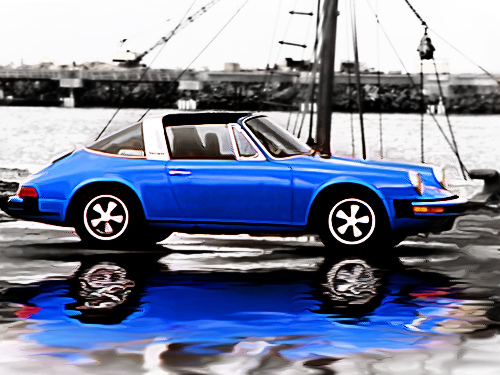
While there is little doubt that the Porsche 911 is one of the greatest and respected sports cars of all time, it may come as a surprise to some that not all 911’s are universally loved.
The mid-1970’s were dark times for auto enthusiasts, but in those dark times, Porsche was a beacon of hope. This was a transition period for the 911, but I would be reluctant to say (as others have) that these were the 911’s “awkward” years.
This generation still retained the simple, clean lines of the earlier 911’s. The engine was modernized with the introduction of Bosch fuel injection. Porsche 911 bodies were now galvanized steel, drastically reducing concerns about rust. Forced to cope with US Federal bumper safety laws, no other automaker made the new impact bumpers look as good as Porsche did with its 911.
From a driver’s standpoint, the engine has the raw, visceral bark we all know and love of air-cooled 911’s. Even better, the 2.7 911s cater to the driver that wants to feel their ride; no power steering or brakes. The car literally talks to you-allowing you to feel, hear and sense everything that is happening.
Yet, these cars remained overlooked. Why?
1974 to 1977 Porsche 911s can still be had at bargain pricing
In particular, the 2.7 liter 911’s, sold in the U.S. from 1974 to 1977 are often overlooked due to the potential for large-scale mechanical issues. Specifically, these cars are known for having “pulled” cylinder head studs. With the 2.7 liter motor, Porsche introduced new metal alloys (Alusil and Nikasil) into the construction of cylinder heads as well as the cylinders themselves. However, they continued to use common stainless steel for the cylinder head studs. As the new metal alloys heated up and expanded, this placed significant strain on the studs, causing them to “pull” and damage the magnesium casing. While this problem didn’t affect every car, its stigma was enough to mark this generation of 911s.
As the owner of a 1976 Porsche 911S Targa, I feel as if I am enjoying the best of both worlds. The smaller, narrower, lighter body is appealing to me. I enjoy the classic features of the chrome ringed headlights, Fuchs rims and other chrome accents. In an age where stainless steel is all the rage again, the brushed stainless steel Targa bar looks more modern than the matte black treatment SC and Carrera Targa’s received.
As a weekend, fair weather cruiser, I like the simplicity of the roll up windows and no A/C. On the modern end, I love the Bosch fuel injection. The car is easy to drive and easy to live with. The galvanized body keeps my rust worries at bay. And, the big bumpers looked so great they remained part of the 911 design for a decade and a half.
A look at any Porsche classifieds will show these cars are a remarkable bargain. Some owners have been tempted to “update” these cars with later style bumpers, rims, and trim, but in my opinion, love your 911 for what it is, and celebrate its era by staying true to it.
Whether you are an aspiring 911 owner, or someone who owns a 997 and wonders about the older 911’s, the ’74 to ‘76 2.7 liter generation of this iconic sports car is worth a look. If the stigma of pulled head studs still bothers you, simply upgrade to a fan with more blades (for better cooling) or find one that has already had the studs replaced (at this point, most have.) With coupe and Targa versions, base, S, and Carrera trim levels Porsche had something for every 911 fan. The mid 1970’s were dark times for the auto industry, but not if you were a Porsche fan.
As a reminder, I’m always interested in anyone looking to contribute. This post asking for Porsche fans as guest bloggers and this one on “How to Win a Porsche Related Book” provide more details. Lastly, if you haven’t done so already, don’t forget to participate in the current poll “What Type(s) of Porsche(s) do you own?“
